I’m doubting the “Intelligence” part of AI right about now. I went for a little outing today and not far away I took a picture looking down on a monument currently in progress. With it being “in progress” it obviously wasn’t great for presentation, and I got the following image.
Original Image
This is a fair representation of what is there. However, it’s okay to visualize what it will look like when the grass fills in. Those patches of dirt are definitely unattractive. Perfect job for AI right? That wonderful time-saving tool everyone tells us we need to rave about.
Okay, so I give it the prompt, “Fill dirt areas with grass and leave everything else alone. The result?
Not Even Joking
This particular instance is humorous to say the least. This is the result produced by software from a massive, well-known, private sector company. That’s important because I think in general; most people accept that the private sector performs better than the public sector. It quits being humorous when you consider these results in light of the fact that, “The Pentagon is Moving Toward Letting AI Weapons Autonomously Decide to Kill Humans.“
Years ago, I gave up my lieutenant bars in the jail to go to patrol. I loved it! About six years in, I get called into the Sheriff’s Office. The then Sheriff told me about a plan he had to resolve some problems in the jail. The jail had gotten less than stellar marks for the last couple of visits from TCJS. He had been approved by the Commissioners for a new lieutenant spot and he wanted me to take it.
I told him I was deeply appreciative of his confidence in me but went on to tell him how much I enjoyed what I was doing. Serving search warrants was always exciting. Patrol officers really don’t come into their own until after about five years. He told me he really thought I was the person to do what he needed done. I declined again and saw something I only saw twice in my career there. The Sheriff tiled his head down and looked over the top of his glasses (the second time has its own story for another time). He said, “Let me put it another way, do you ever want to have rank in this agency again?”
My reply? “It sounds like a wonderful opportunity sir!” And back off to the jail I went.
He explained I would remain on the Special Response Unit (our tactical team). I would get to keep my take home car and when I wasn’t tied up with jail issues, I could go out on patrol. The issue he wanted resolved was fixed in a couple of months. It turned into one of the best times I ever had at a job. It led to me being the PIO (fun), responsible for two small sections in the Sheriff’s Office, and pretty much free to find things to fix and to do what I wanted.
Looking back, it turned out that what I least wanted at the time was a tremendous blessing to me and to my career.
I was thinking about this time the other day. I couldn’t help wonder how many times I may have missed out on something better because I was happy where I was.
CN, if you aren’t aware, is short for Christian Nationalism. The reader can assume what is meant by that, and if you assume incorrectly, that’s on you, not me. To let people know how I view it, I have written about that term here, and here. There is some raging debate on the site formerly known as Twitter between people who agree on all other fundamentals of theology.
Meanwhile, life goes on. Part of that life is taking training to maintain my Texas Peace Officer’s License, even though I retired from doing that for a living. One of the courses I’m currently taking discusses active shooter incidents and “disaster psychology.” Here, this term is referring to the psychology of a person who unexpectedly finds themselves in the middle of an active shooter event. Basically, what they experience and how it impacts them. They go through the stages of denial, deliberation, and decision making.
The denial phase consists of people responding due to normalcy bias. Basically, it is our tendency to interpret everything through our normal day-to-day experiences because it is easier for our brain to process information. Hence, many survivors of active shooter events tend to say things like, “At first, I thought it was firecrackers.” It’s an initial denial of the event because, “That won’t happen here, to me.”
A normalcy bias causes us to assume that, although a catastrophic event has happened to others, it will not happen to me. If it does, we are shocked and unable to cope with it effectively, often underestimating its full effects.
Once the disaster is accepted, they turn to deliberation. However, due to the previous disruption of their environment, people in the midst of a disaster tend to have poorer thinking skills than they would without that disruption. One of the topics discussed in this section involves “social proof” and its role in decision making. Several videos of unfolding disasters show those involved starting to look around at what others are doing, this behavior is shortly followed by a mass of people acting in the same manner. They cited research that a lone individual is more likely to help someone in need than someone in a crowd would be. But social proof of our decisions also tends to make our decisions vulnerable to be less in line with how we would normally act, they may not even make sense.
When we use social proof to inform our behavior, we are not necessarily acting rationally.
Finally, the deliberation turns to decision making and the individual makes a decision to act. This training talks a lot about how those decisions are not always good decisions. One of the events used to demonstrate this was The Station nightclub fire. The image below (from this study) shows the location of the victims of that fire. Roughly half of them died trying to exit the same door, the one they came in, despite there being three other exits, four if you count windows. Helpful hint, always pay attention to where ALL the exits are in every building you enter.
Sadly, many of these victims may have had a chance to escape had their thinking, or maybe the thinking of others, been more rational. None of this is victim blaming. The purpose of the training is to help civilians be prepared to combat some the naturally occurring physiological responses to stress, and its impact on our thinking, in order to increase their chances of survival. Overall, the course has been excellent, and I can’t wait to use it to help people.
Studies have shown that when stressed, individuals tend to make more habitual responses than goal-directed choices, be less likely to adjust their initial judgment, and rely more on gut feelings in social situations.
That’s all well and good but why in the world did I start this article with a paragraph about CN? That’s because as I am going through this training, it occurred to me that the phenomenon I am witnessing in some folks response to CN is like watching these stages play out in slow-motion. I wouldn’t know any serious Christian who would say our culture/civilization/society is not in the midst of sudden change (on the timescale of all of society) and that the changes we are seeing are disruptive of our expectations and that in general, it is currently a disaster.
There are still many who are oblivious to this unfolding disaster, though that number has started shrinking fast. Many still haven’t recognized the change around them is outside normal experience. Still, it seems a growing number of people are moving out of the deliberation phase and into decision making. And this is where the conflict is being generated.
A group of people looked at each other and knew something had to change for society to survive. Some recognized it much longer ago than others. They saw what each other were doing and recognized it as similar and started to coalesce around similar ideas. The people here I am thinking of are Doug Wilson, A. D. Robles, Joel Webbon, William Wolfe, Stephen Wolfe, and those in that group. They don’t all agree on everything but do agree on enough to begin acting. Personally, I think they recognized what was happening more quickly and started reacting before others. History may show some of their reactions were off target of where they should have been and that’s okay. We, and they, are all humans.
But here’s where the conflict arises, the Moore sisters were some of the earliest people to warn of Christian Nationalism in the modern era. It got just enough of a foothold that others, still deliberating and looking for social proof of their decisions, saw something that scared them. Their reaction was not rational (in my opinion) and was based on gut feelings and how others close to them were responding.
That would explain why people I followed for years suddenly began making weird decisions and accusations that were entirely unfounded. Some people have responded rationally. Those folks have calmly stated their concerns and defined what they mean. Others just started out with what were really wild claims.
I hope we can all take the time to do some social combat breathing, slow our reactionary impulses, and come up with rational, scripture-based responses to concerns and to what is going on with society. Believe it or not, this actually gave me more hope that the conflict I see will ultimately be resolved. I think, if this is a disaster response in slow-motion, many of those who are anti-CN for reasons that are not rational reasons, will eventually get over the shock and disruption and return to sound thinking. I hope.
If ever a post should end with a verse from scripture, this one should. Peace and Grace of the Lord Jesus Christ to you, reader.
For God hath not given us the spirit of fear; but of power, and of love, and of a sound mind.
Short but true. Christians who want to walk in a God-honoring manner should steer clear of the Enneagram and the heretic Russell Moore.
Christianity Today podcast advances the spurious claim that the Enneagram has "Christian roots"
"There was a well-known monk named Evagrius Ponticus…who began using a primitive form of the Enneagram in spiritual formation with young novice monks."
If you haven’t read much on the Enneagram or are considering using it, do some research on it. At least read this article as an introduction.
And, if you don’t have a Twitter/X account, you should be able to read the whole thread mentioned above right here. If you do have one, @WokePreacherTV would be worth a follow.
I was asked what I enjoy about writing. It is obviously not that I gain anything financially from it. It’s not even for my regular readers. Sorry, Mom and mystery person who I can’t figure out. No, both my regular readers can probably survive without these rambling posts.
I enjoy writing for several reasons. One, it is cathartic for me when I am stressing over something I see going on in the world at large.
Two, it helps me organize my thoughts on subjects that I’ve been considering. I know these posts don’t always look like they are organized, but they bring order to my thoughts at times.
Third, I just like to put thoughts out there for people to consider. Once in a while, I put a post up here that gets a few views. I can only hope they are helpful or at least humorous to the readers.
In response to the prompt above, I was instantly pretty sure I couldn’t list thirty things, but we shall see. If I can’t, should I be worried?
Reading the Bible
Being near my wife
Talking with any of my children
Playing with the grandson
Playing games with family
Flying one of my drones
Writing ( a little bit)
Cooking with the wife
Driving to good music
Listening to birds greet the sun
Watching drogonflies hover over water
Hummingbirds
Seeing people change their lives for the better
Talking with friends I haven’t seen for a while
Time spent in prayer (mostly)
Camping
Riding a bicycle (when it doesn’t feel like we’re living in Hades)
Learning something new
Reading a good book
Photography
Making videos
Well, I got more than halfway there. That was more than I thought I would get to be completely honest. I’m not sure if this means I should find more things to make me happy, do these things more frequently, or nothing at all.
I was given th is writing prompt by my blog software. Here we go.
I’m curious to know what goes on in the halls of the White House under this administration. I’ve never thought of that much before. I mean, of course I did once in a while. What American wouldn’t. This is something different. Our president can’t speak or think consistently, and “he” puts cross-dressers in charge of vital national interests.
Currently, I am also curious about how the bubbling pot of ginger, lemon, and sugar is going to turn out after I pitch a batch of wine yeast into it (after the bubbling has ceased). Hopefully, after a week or so, I’ll have something tasty.
I’m curious to hear someone who adheres to scientism as their faith explain how butterflies and their transformation evolved. Did they evolve from caterpillars? Where did the egg come from if there was no butterfly to lay it? How does dissolving into a soup, leaving yourself defenseless, and reconstituting yourself into a creature that can’t really eat enhance your ability to survive?
I’m curious who will read this and if they have placed their faith in the One True God.
I’m going to toss this out there with the full realization that it may make some people uncomfortable. Much of modern evangelicism wants to talk about only God’s grace and his love. Both are real. Both are amazing beyond our belief. Should he withdraw either of them, we have no hope of salvation. Sadly, the spotlight is often so focused on grace and love that other aspects of spiritual reality lie off-stage, forgotten in total darkness.
One of those forgotten realities deals with wicked people. Psalm 11:5 (ESV) says:
The LORD tests the righteous, but his soul hates the wicked and the one who loves violence.
God can’t hate non-existent things. He hates the wicked (Psalm 5:5). Amidst the grace, love, and generally get your feels going talk, it seems we sometimes forget this fact:
THERE. ARE. WICKED. PEOPLE.
You probably know some and hesitate to recognize them as such. I say that because, in my fifty+ years, I have only called one, single, solitary person on the that I’ve known personally as “wicked,” and it was one of the most difficult things I’ve done.
I’ve recently realized I should be open to recognizing folks as wicked – more often and much more quickly. Not doing so leads to harm as much, if not more, than calling too many people wicked too quickly.
If you are like me, you are old enough to remember when margarine invaded everybody’s homes because butter was bad for you. The tubs of synthetic fats with artificial flavoring never seemed right to me. Same with the egg. I remember as a child when eggs were cut back, not eliminated, from my home because “scientist” said they were too unhealthy due to cholesterol.
Today, sites like WebMD will inform you that butter has potential cons but also that it can lower chances of cancer, help you eyes, strengthen your bones, and improve your skin. You can even find the American Heart Association now saying that an egg a days can keep the doctor away!
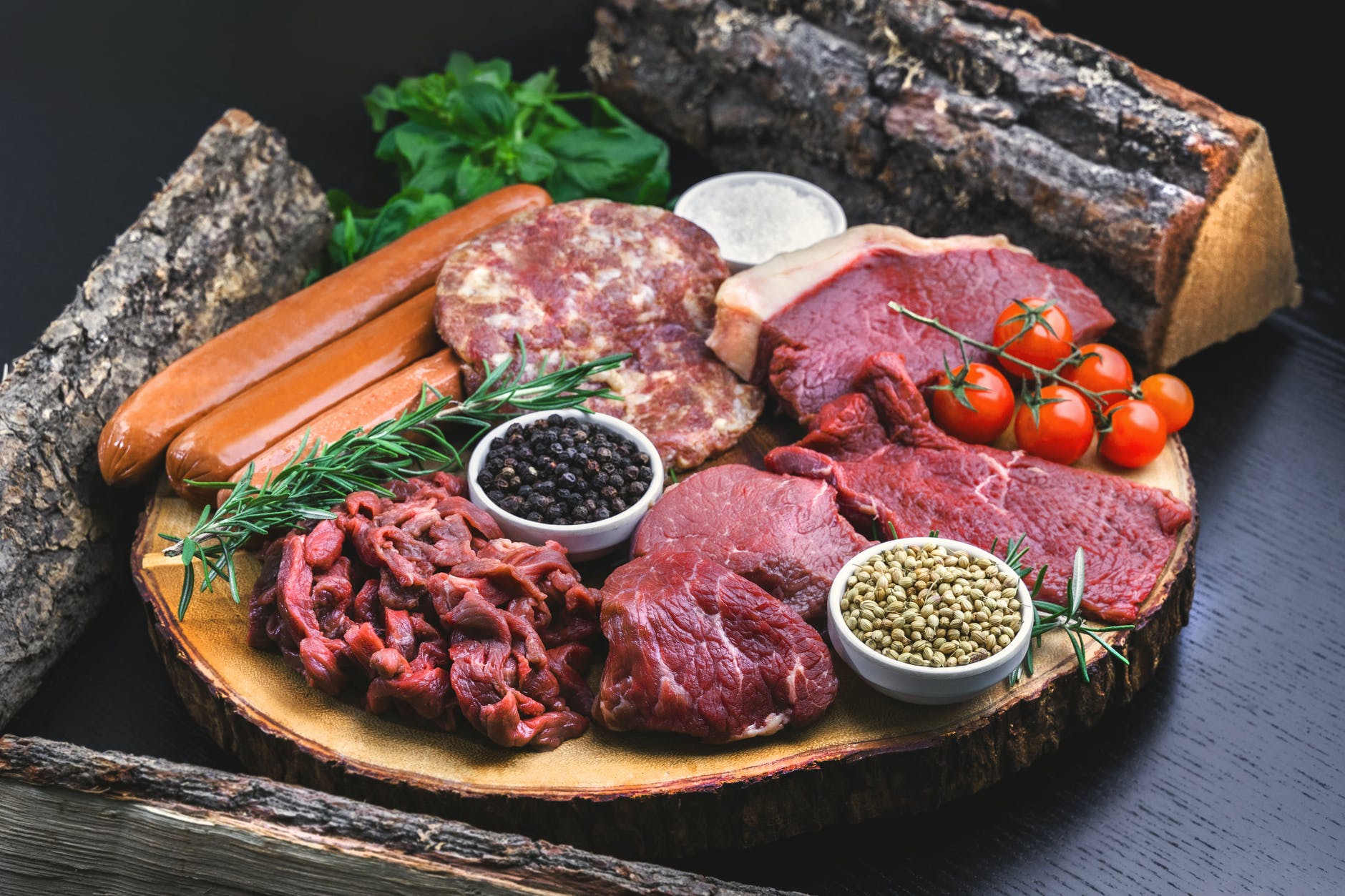
If you’re not old enough to remember those earlier days, most will have heard the message, “Meat bad.” Everything from it builds up in your gut, to it’s mean and ruins the environment. There is a culture war on meat like so many other things.
Enter the University of Adelaide from Australia. They have released a study, “Total Meat Intake is Associated with Life Expectancy: A Cross-Sectional Data Analysis of 175 Contemporary Populations”1 which claims to have been based on “approximately 90% of the worlds population” (p.1834). That’s a big study! I don’t recall reading or hearing any study with a population that large on any topic.
This study takes a direct shot at what is widely assumed as accepted fact. That is, that vegetarian diets are healthier. Indeed, the authors state, “the suggestion that vegetarian diet improves longevity is questionable” (p. 1834). Rather, they come to the opposite finding, specifically, “meat intake is positively associated with life expectancy at a national level” (p. 1847). It is worth noting they defined meat in accordance with the definition used by the United Nations Food and Agricultural Organization which:
is defined as “flesh of animals used for food”, and total meat includes beef and veal, buffalo meat, pig meat, mutton and lamb, goat meat, horse meat, chicken meat, goose meat, duck meat, turkey meat, rabbit meat, game meat and offal.
(p. 1835)
They found countries “with greater meat intake have greater life expectancy and lower child mortality” (p. 1843). This news won’t come as a shock to many who approach food in a counter-cultural understanding. If you’ve previously understood that it’s better to eat food as God intended, then this won’t come as any surprise.
This study is now over a year old, and the push to move away from meats and to life expectancy reducing diets continues. Why is that?
1.
You W, Henneberg R, Saniotis A, Ge Y, Henneberg M. Total Meat Intake is Associated with Life Expectancy: A Cross-Sectional Data Analysis of 175 Contemporary Populations. IJGM. Published online February 2022:1833-1851. doi:10.2147/ijgm.s333004
We use cookies on our website to give you the most relevant experience by remembering your preferences and repeat visits. By clicking “Accept All”, you consent to the use of ALL the cookies. However, you may visit "Cookie Settings" to provide a controlled consent.
This website uses cookies to improve your experience while you navigate through the website. Out of these, the cookies that are categorized as necessary are stored on your browser as they are essential for the working of basic functionalities of the website. We also use third-party cookies that help us analyze and understand how you use this website. These cookies will be stored in your browser only with your consent. You also have the option to opt-out of these cookies. But opting out of some of these cookies may affect your browsing experience.
Necessary cookies are absolutely essential for the website to function properly. These cookies ensure basic functionalities and security features of the website, anonymously.
Cookie
Duration
Description
cookielawinfo-checkbox-analytics
11 months
This cookie is set by GDPR Cookie Consent plugin. The cookie is used to store the user consent for the cookies in the category "Analytics".
cookielawinfo-checkbox-analytics
11 months
This cookie is set by GDPR Cookie Consent plugin. The cookie is used to store the user consent for the cookies in the category "Analytics".
cookielawinfo-checkbox-functional
11 months
The cookie is set by GDPR cookie consent to record the user consent for the cookies in the category "Functional".
cookielawinfo-checkbox-functional
11 months
The cookie is set by GDPR cookie consent to record the user consent for the cookies in the category "Functional".
cookielawinfo-checkbox-necessary
11 months
This cookie is set by GDPR Cookie Consent plugin. The cookies is used to store the user consent for the cookies in the category "Necessary".
cookielawinfo-checkbox-necessary
11 months
This cookie is set by GDPR Cookie Consent plugin. The cookies is used to store the user consent for the cookies in the category "Necessary".
cookielawinfo-checkbox-others
11 months
This cookie is set by GDPR Cookie Consent plugin. The cookie is used to store the user consent for the cookies in the category "Other.
cookielawinfo-checkbox-others
11 months
This cookie is set by GDPR Cookie Consent plugin. The cookie is used to store the user consent for the cookies in the category "Other.
cookielawinfo-checkbox-performance
11 months
This cookie is set by GDPR Cookie Consent plugin. The cookie is used to store the user consent for the cookies in the category "Performance".
cookielawinfo-checkbox-performance
11 months
This cookie is set by GDPR Cookie Consent plugin. The cookie is used to store the user consent for the cookies in the category "Performance".
viewed_cookie_policy
11 months
The cookie is set by the GDPR Cookie Consent plugin and is used to store whether or not user has consented to the use of cookies. It does not store any personal data.
viewed_cookie_policy
11 months
The cookie is set by the GDPR Cookie Consent plugin and is used to store whether or not user has consented to the use of cookies. It does not store any personal data.
Functional cookies help to perform certain functionalities like sharing the content of the website on social media platforms, collect feedbacks, and other third-party features.
Performance cookies are used to understand and analyze the key performance indexes of the website which helps in delivering a better user experience for the visitors.
Analytical cookies are used to understand how visitors interact with the website. These cookies help provide information on metrics the number of visitors, bounce rate, traffic source, etc.
Advertisement cookies are used to provide visitors with relevant ads and marketing campaigns. These cookies track visitors across websites and collect information to provide customized ads.